A Garden Journal You Will Actually Keep
Record a few useful details instead of trying to document everything.
By Raised Bed Garden Ideas editorial team · 4 sections
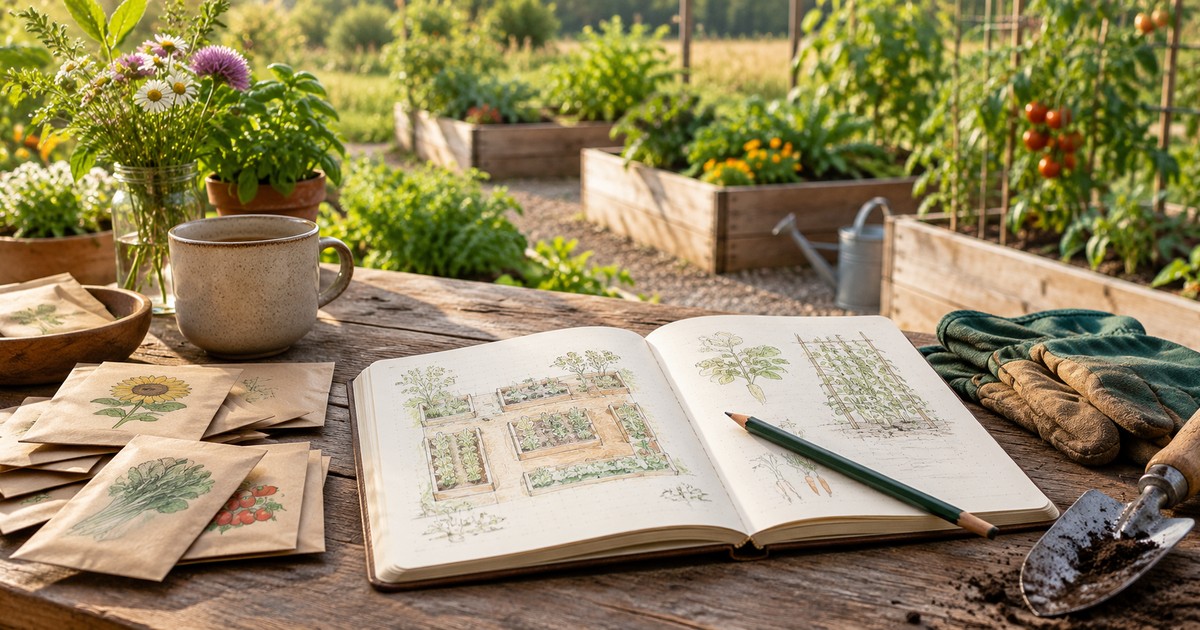
Start with a simple bed map
Draw the outline of each bed and label the crops. Add planting dates and variety names where known. Keep the map somewhere easy to update, whether that is a notebook or a digital file. Even a rough drawing can prevent confusion when seedlings are small and several planting sessions overlap.
Use a short recurring entry
Record the date, a brief weather note, and one or two observations. Mention harvesting, watering changes, or anything you want to investigate. Keep the entry small enough to complete after ordinary garden care. A journal that takes two minutes and continues all season is more helpful than a detailed system abandoned after a week.
Photograph with a purpose
Take a photo from the same position occasionally to compare growth. For a problem you want help identifying, include both the whole plant and a clear close view. Label photos with the bed or crop name. Avoid collecting images without context; a sentence about what changed makes them easier to interpret later.
Review before the next season
Look for crops you enjoyed, tasks that were difficult, and areas that need a different plan. Separate observations from guesses about their causes. Keep a short list of changes you want to try rather than redesigning everything at once. Your own records can make the next planting plan more realistic and personal.